How to Start Playing Tennis in San Jose, CA in 2026
24 September 2026 · 8 min read
San Jose has more rated tennis and pickleball venues than almost any other city in Santa Clara County: public park courts tucked into neighborhood greenbelts, country-club courts, junior academies, and a fast-growing pickleball scene. The hard part isn't finding a place to play — it's knowing which door to walk through first. This guide breaks the city's 75 rated tennis clubs, courts, centers and coaches into a simple decision path: how to size up your level, where to hit for free, when a club membership or lessons make sense, and where to get a racket strung once you're playing regularly.
Start by Figuring Out What You Actually Need
Before picking a court or a coach, it helps to separate three different goals, because San Jose serves each one differently. If you just want to hit a ball around with a friend on weekends, the city's public park courts cost nothing beyond your own racket and balls. If you want structured improvement — footwork, stroke mechanics, match strategy — that calls for a coach or an academy, at least for a few sessions. And if you're chasing regular competitive play against people at your level, a club membership or a USTA league team is the more direct route than showing up at a public court and hoping to find a game.
None of these paths are exclusive. Plenty of San Jose players use public courts for casual practice, take periodic lessons to fix specific problems, and join a club or league once they're ready for structured competition. The order below roughly follows how most beginners and returning players actually progress.
It also matters whether you're starting from zero or picking the sport back up after a gap. A returning player often just needs court time and a hitting partner; a true beginner usually benefits more from at least a short block of lessons before playing full sets, since bad early habits in grip and footwork are harder to unlearn later. Either way, San Jose has enough options at each level that you don't need to guess — the categories below map roughly to how serious and how structured you want your tennis to be.
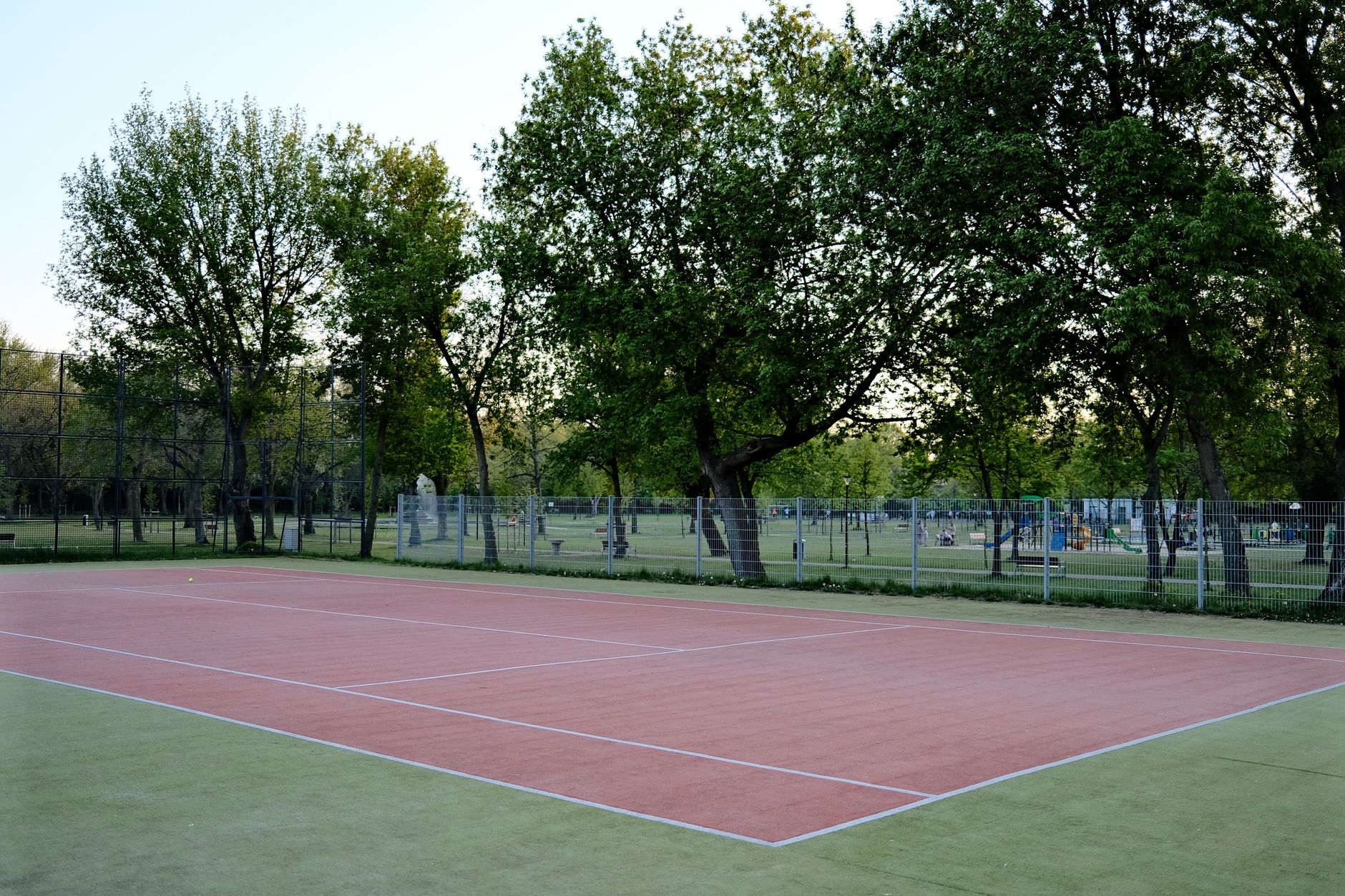
San Jose's park system carries most of the city's casual, walk-up tennis. Calabazas Park is one of the better-reviewed options, rated 4.6 from over a thousand Google reviews, with courts open to the public at no charge.
Public courts in San Jose generally work on a first-come, first-served basis unless a specific park posts its own reservation system — check the individual facility's page or call ahead, since policies vary park to park and can change. Bring your own net-height checker if you're picky about it; not every park court gets inspected on a fixed schedule. For a fuller list of options beyond Calabazas Park, the tennis courts category page for San Jose covers all 21 rated locations, including several at local high schools and community colleges that allow public play outside school hours.
If pickleball is more your speed, or you want a lower-impact way to build racket-sport fitness before committing to tennis, San Jose has a growing set of dedicated pickleball venues — more on that below.
Joining a Club for Structured, Regular Play
Once casual hitting isn't enough, a club membership is the next step up. San Jose has several swim-and-racquet clubs that combine tennis courts with pools and social programming, which tends to suit families and people who want tennis to be one part of a broader membership rather than a single-purpose gym visit.
Almaden Swim & Racquet Club is rated 4.6 from 64 reviews and pairs court access with membership-based programming typical of this club format. Because membership structures, dues, and guest policies vary by club and change over time, check current rates directly with each club rather than assuming a flat price — what one club charges for a family membership can differ substantially from another's, and neither this guide nor the directory listing invents a number that might be stale by the time you call.
Country-club-style courts, like those attached to Silver Creek Country Club, are another tier worth knowing about if you're weighing a membership that includes tennis alongside golf or dining — those are typically pricier and more exclusive than a standalone racquet club, so they suit a different kind of player than someone just looking for reliable court time.
Before signing anything, ask each club directly about guest passes, whether court time requires a separate reservation system on top of membership, and how many courts are reserved for lessons versus open play during peak evening hours. These operational details vary enough between clubs that they're worth a phone call rather than assuming one club works the same way as another down the road.
Getting Lessons or Coaching
If your goal is measurable improvement rather than just court access, lessons are usually the fastest path, and San Jose has enough instructors that you can match a coach to your level and goals rather than taking whoever's available.
830 Saratoga Ave c305, San Jose, CA 95129, United States
★★★★★4.8(29)
SAI Tennis Foundation is rated 4.8 from 29 reviews. For a juniors-focused program with group and private formats, one of the city's rated tennis clubs also runs structured coaching:
This club's own directory listing describes it as serving "all ages and levels" with group, semi-private, and private sessions, plus seasonal camps and clinics — a useful signal if you're choosing between a solo-instructor lesson and a club-based program with more structure and a junior pipeline. The tennis lessons and coaches category page lists all eight rated instructors in the city if neither of these fits your schedule or location.
A first lesson is also the cheapest way to find out whether you actually like the sport enough to invest in a racket, a club membership, or a league team — worth doing before any bigger commitment.
Pickleball as an On-Ramp or a Parallel Sport
Pickleball has grown quickly in San Jose, and it's worth considering whether you're new to racket sports altogether or you already play tennis and want a lower-impact alternative on rest days. The smaller court and lighter paddle make it easier to pick up in a single session than tennis is.
Ace Pickleball Club is rated 4.9 from 45 reviews, among the highest-rated racket-sport venues in the city in either sport. The pickleball courts and clubs page for San Jose lists the rest of the city's four rated pickleball venues, including free park courts if you'd rather not join a dedicated club before deciding you like the game.
Way to play
Typical cost
Best for
Public park courts
Free
Casual hitting, testing the sport, no commitment
Private lessons
Check current rates
Fixing specific mechanics, fast improvement
Club membership
Check current rates
Regular access, social play, family use
Pickleball club or court
Free (park) to check current rates (club)
Lower-impact alternative, quick to learn
Gear: Rackets, Restringing and Where to Buy
Once you're playing more than occasionally, an ill-fitting racket or dead strings will hold back your game more than most technique issues. San Jose has a dedicated specialty shop for this rather than leaving you to general sporting-goods stores.
Racquetstore.com is rated 4.9 from 433 reviews, a notably large review count for a specialty shop, and its listing describes it as a family-owned store established in 2008 covering tennis, pickleball, badminton, and padel equipment. For most beginners, a shop that can demo a few racket weights and grip sizes in person, and restring on-site, is worth the trip over an unfamiliar online order — you can't feel string tension or swing weight from a product photo. The tennis stores category page covers this and any other rated shops added to the directory over time.
Leagues and Ongoing Competitive Play
Once you've got a racket that fits, some lessons under your belt, and access to courts through a club or regular park sessions, USTA league play is the standard next step for adult competitive tennis in the U.S., organized by NTRP skill rating so you're matched against players near your level rather than whoever happens to be free. San Jose's club scene — including the swim-and-racquet clubs and country clubs listed above — is where most local league teams recruit and practice, so joining one of those is often the practical route into a team even before you're league-ready on your own.
What NTRP Ratings Mean if You're New to Leagues
If you've never played organized tennis before, the NTRP (National Tennis Rating Program) scale is worth understanding before you join a league team, since it's how USTA leagues sort players into fair matchups rather than letting a beginner get run off the court by a former college player. Ratings typically run from 1.0 (just starting out) to 7.0 (world-class), in half-point increments, with most recreational adult league players falling somewhere between 3.0 and 4.5. A coach or an experienced club player can usually give you a rough self-rating after watching you hit for ten minutes, and many leagues also offer a more formal evaluation process before you're placed on a team. Getting your rating roughly right matters for match quality on both sides of the net — a team stacked with players rated well above or below their actual level makes for lopsided, less enjoyable matches all around.
The Practical Takeaway
If you're brand new to tennis in San Jose, the lowest-friction start is a free session at a public park court like Calabazas Park, followed by one or two lessons to check your fundamentals before you spend money on a membership or a full racket setup. If you already play and are relocating or leveling up, go straight to a club with racquet programming or a rated instructor, and get properly fitted for a racket at a specialty shop rather than a big-box store. Either way, check current rates directly with clubs, coaches, and shops before committing, since membership dues and lesson pricing change and aren't listed here to avoid quoting a number that might already be out of date.